
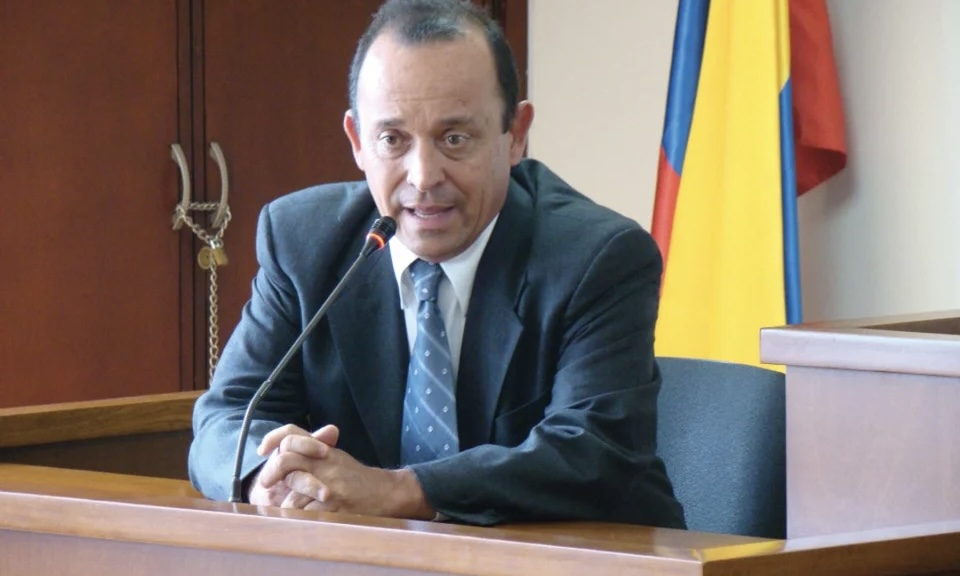
As a final-instance ruling, the decision exhausts all ordinary appeals within Colombia’s judicial system
The Supreme Court of Colombia has upheld the 28-year-and-four-month prison sentence imposed on Santiago Uribe Vélez, brother of former President Álvaro Uribe, for aggravated homicide, founding a paramilitary group, and aggravated criminal conspiracy, ending a judicial process that lasted more than three decades.
The decision was issued in ruling SP499 on June 3, 2026, in which the country’s highest court ratified a November 2025 verdict by the Antioquia Superior Court. That court concluded that Uribe Vélez led the paramilitary group known as Los 12 Apóstoles, an illegal organization that operated in northern Antioquia during the 1990s.
“The Supreme Court has confirmed the conviction of my brother Santiago. This is a devastating matter for my family,” former President Álvaro Uribe wrote on X after the ruling became public.
Jaime Granados, attorney for both Santiago Uribe and the former president, described the ruling as “unjust” in a public statement, although he acknowledged that it must be “respected and complied with.” Granados also said he would continue defending his client’s innocence despite the fact that the Supreme Court’s decision exhausts all ordinary appeals within Colombia’s judicial system.
Los 12 Apóstoles and the killing of Camilo Barrientos
The full court concluded that Santiago Uribe was one of the leaders of Los 12 Apóstoles, a paramilitary organization accused of carrying out a systematic campaign of killings in coordination with state agents, a practice historically referred to in Colombia as “social cleansing.”
One of the central events in the case was the killing of Camilo Barrientos, a bus driver who was shot by hired gunmen on February 25, 1994, in Antioquia after being falsely accused of collaborating with guerrilla groups.
According to the ruling, the homicide formed part of a broader strategy aimed at persecuting and eliminating individuals considered undesirable or allegedly linked to insurgent organizations.
A judicial process lasting more than 30 years
The investigation against Santiago Uribe dates back to 1995, when judicial proceedings first began regarding the creation and operation of Los 12 Apóstoles.
According to court records, the organization was allegedly created in 1992 by ranchers and business owners in northern Antioquia with the stated objective of providing a form of “private justice” in response to the presence of illegal armed groups in the region.
Authorities maintain that the group carried out a systematic campaign of killings in municipalities including Campamento, Yarumal and Valdivia, targeting people labeled as common criminals, drug users or alleged guerrilla collaborators.
The investigation was initially closed in 1999. However, the case was reopened years later following new testimony, including statements by retired National Police Maj. Juan Carlos Meneses, who in 2010 once again linked Santiago Uribe to the paramilitary organization.
From acquittal to final conviction
Santiago Uribe was acquitted in November 2024 by Judge Jaime Herrera Niño, who acknowledged the existence of Los 12 Apóstoles but concluded that prosecutors had presented evidentiary inconsistencies and that several witness testimonies lacked sufficient reliability to support a conviction.
By that time, Uribe had already spent two years in detention between 2016 and 2018 under a preventive custody order.
The situation changed in November 2025, when the Antioquia Superior Court overturned the acquittal and concluded that the defendant had led a criminal organization, sentencing him to 28 years and four months in prison.
The Supreme Court’s decision now fully upholds that sentence and definitively establishes the criminal responsibility of the former president’s brother.
Although the ruling concerns only Santiago Uribe Vélez, the case has had broader political repercussions because of the public prominence of his family. Former President Álvaro Uribe, one of the most influential figures in Colombian politics over the past several decades, has repeatedly denied any connection to paramilitary groups.
To date, no judicial authority has convicted the former president of crimes related to such allegations. However, more than 25 judicial proceedings connected to his alleged political links to paramilitary groups have remained open in recent years.
One of the most prominent cases involving former President Álvaro Uribe originated from complaints filed by current presidential candidate Iván Cepeda, alleging witness tampering in criminal proceedings and procedural fraud. Although Uribe was convicted in a lower court in 2025, he was later acquitted by a higher court, meaning the case did not result in a final conviction.
With the Supreme Court’s decision, the case against Santiago Uribe Vélez is now closed within Colombia’s ordinary judicial system.