
Loren Moss, founder and publisher of Finance Colombia, spoke with Alicia Lamadrid Paysse, vice president of development sales at Cervera Real Estate, the Miami-based firm that has exclusively handled the sales and marketing of more than 120 South Florida condominium towers since the family company was founded in 1969.
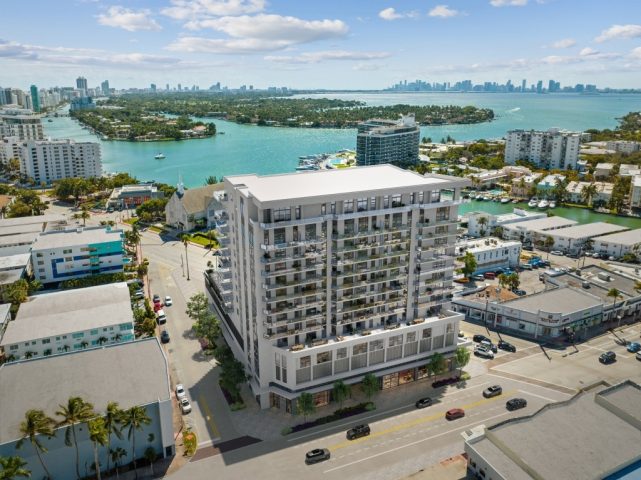
Cervera is the exclusive sales and marketing team for two condominium projects developed by Lefferts Development in North Beach, a fast-growing neighborhood at the northern end of the city of Miami Beach. The first, 72 Park, was completed in 2025; the second, PALMA Miami Beach Residences, is a 14-story, LEED Gold-certified building under construction at 600 71st Street. Both are permitted for short-term rentals — a rarity on Miami Beach — allowing owners to occupy their residences and rent them out while away. PALMA’s one- and two-bedroom turnkey units start in the $630,000s USD.
For Colombian buyers, long among the most active Latin American investors in South Florida, the model pairs a US-dollar asset with rental income. According to Cervera, buyers from Colombia account for roughly 6% of sales at 72 Park. In the conversation that follows, Lamadrid Paysse discusses Miami’s transformation into a global city, the tax and lifestyle factors drawing international capital, and what sets North Beach apart. The interview has been lightly edited for clarity and formatting.
Finance Colombia: I’m here with Alicia Paysse of Cervera Real Estate. Cervera is a major real estate firm based in the Miami area, world famous. You have some very impressive developments — high-end developments, accessible developments, and we’ll get into that — throughout Miami. But your track record, if I remember correctly as a former Miami resident, goes back over 50 years. First of all, welcome to this interview. Thank you for making time for us. Really honored to have you, and welcome to Finance Colombia.
Alicia Lamadrid Paysse: Thank you so much. It’s great to be talking to you today. And it’s great that you have lived in so many places and are so familiar with Miami and our exciting market. It’s changed a lot, so having your kind of perspective, I think, helps put it into context. But yeah, you’re right.
I work with a family company that was founded by my grandmother over 50 years ago, in 1969. We’ve been working with developers, handling the sales of condominiums, since essentially the start of the company. Over the lifetime of the company, we’ve represented over 130 condominium buildings in South Florida, and probably over 72,000 condo units in pre-construction sales. So it’s a pretty big trajectory in our little pocket of South Florida, because we’re just a Miami-based company.
Finance Colombia: It’s really fascinating when I think about visiting Miami as a kid back in the ’70s, and also visiting places like Miami Beach, which was this little sleepy — I don’t want to say retirement community, but it just had this kind of funky, bohemian vibe. It was really just a laid-back, sleepy place compared to the changes it went through in the ’80s and ’90s, with the influx of immigration really giving Miami a vibrant personality.
And then there’s the Miami of today. Even down here in South America, we might say that Bogotá is the capital of Colombia and Washington is the capital of the US, but Miami is the capital of Latin America. What kind of changes have you really seen in the evolution of the market — not just from an economic standpoint, but the types of development, and the reasons and motivations behind the growth of Miami as a real estate destination, both from an investment standpoint and a residential one?
Alicia Lamadrid Paysse: We’ve seen a lot of change. The city has grown tremendously. I think the greatest accelerator to the change we’ve seen in Miami, both economically and in the types of developments, was the pandemic. The pandemic really opened a lot of people up to having more work-from-home flexibility. People started coming to Miami to see what it was like to live here, because you could be outside when everywhere else you couldn’t — it was too cold. People fell in love with the place, and that drove a huge amount of interest.
“Now, wealthy international people are seeing Miami as one of the big cities in the world.” — Alicia Lamadrid Paysse, Cervera Real Estate
In Colombia, one of the things we have to explain to our international buyers who are interested in Miami real estate is that not all states have equal tax policy. This is an ‘aha!’ moment for a lot of Latin American buyers, when they realize that the highest earners in markets like Manhattan, or certain cities in California, can pay around 10% more on top of the federal income tax.
That really makes a lot of people see why there’s a natural incentive to move to Miami, and the pandemic accelerated it. We’ve seen huge industry moving here, and huge employers — and huge numbers of those employers’ workers — moving as well.
In the Miami I was born and raised in, you didn’t have the staff of a company buying $10 million USD houses. There weren’t $10 million USD houses back then; they didn’t even exist when I was growing up. The top of the market — whatever the price was — was made up of the entrepreneurs who started their businesses, or CEOs, very high-level people. These were not a 35-year-old who works at Citadel and is an employee. He might be brilliant, and I’m sure he makes a lot of money for the company, but he’s still an employee. We didn’t have those kinds of banks. We didn’t have that level of economy, with those types of jobs where people could make that much money in a job.
That shift has led to a completely different type of real estate inventory that people are looking for. The level of luxury and the price point keep elevating, because people want that turnkey service experience. The type of people being attracted to this market are more and more discerning, more and more high-level. We’re seeing a tremendous number of entrepreneurs, and people with international jobs who travel a lot for technology businesses or growth roles, also coming to Miami.
Finance Colombia: I think you’re right. Anecdotally, I can think of a couple of friends of mine who run a publicly traded company that trades in the US — they just moved from Barranquilla to Miami. And Miami is becoming more and more attractive.
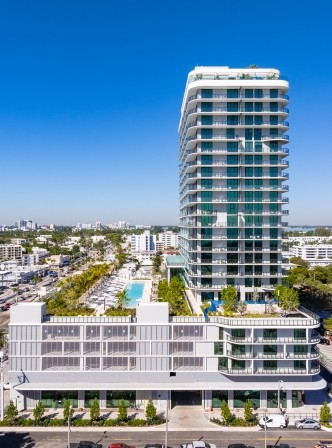
The 72 Park project on Miami Beach (photo: Lefferts)
Think about Colombia, for example, and a situation with volatility. By the time this comes out, we’ll have had — on Sunday — the first round of the presidential elections. We may have four more years of what we could call a far-left ideology in power; we may not. There will probably be a runoff in June. But there is a lot of uncertainty. No matter what happens, and no matter who someone supports, there is a lot of uncertainty. The debt has exploded, and Colombia is going to see increasing demand for dollars, because it needs to pay back dollar-denominated debt in the coming years.
All of this uncertainty creates a situation where people are looking for, at minimum, a hedge. They need to say, ‘It’s not prudent to keep all of my assets in a way that can rapidly depreciate.’ And it’s generally good to diversify across borders when we talk about real estate.
You touched on taxation. In the United States, my own brother just moved to Florida from Ohio, primarily because of the tax burden — because when you’re in that top tax bracket, even in a relatively moderate state like Ohio. Look at what just happened in Washington State, where they passed a tax targeting people with substantial assets. Starbucks (NASDAQ: SBUX) announced it was moving headquarter operations to Tennessee. We’ve seen companies leave California for Texas. You mentioned Citadel — they went from New York to Miami.
I remember when Miami was not — back in the day, you had Ryder (NYSE: R), Assurant (NYSE: AIZ), and Burger King as just about the only major company headquarters in Miami. That’s changed drastically, because now, when you’re talking about ‘Silicon Beach’ and these kinds of initiatives, it really has changed the investment environment for Miami.
I know a lot of the investors — and your entire sales team is perfectly competent to work with domestic buyers, but also with the language and cultural skills to work with buyers from places far beyond Latin America. When I was in Miami, this was a surprising thing — people don’t realize I became partially fluent in Russian. You have all of these people who, if you look at the instability there, are moving, not just from an investment standpoint, but also looking for somewhere they can continue to live a good life and contribute to their local society. What are the motivations you see when you talk to the international investor? Is it a place to live? Is it an economic hedge? What are the prime movers, not to use a pun, when people look at real estate opportunities in Miami?
Alicia Lamadrid Paysse: All of this we’ve discussed has positioned Miami as a very important global city. Before, Miami was — I don’t want to say a joke, but in the ’90s no one took Miami seriously as an economic force. Even if we had a lot of international banks here, that was just a tiny grain in the beach of the US economy.
Now, when you look at the city and the environment, and you talk about the politics — I don’t want to talk about politics too much, but one of the large drivers that brings people to Miami, over and over, has been politics. Even recently, with the whole comment the mayor of New York made about the gentleman at Citadel, personally naming him — it was something so crazy that you see people feeling like they’re a target. People feel safe in Miami. So one of the big things that drives people here is safety. Another is culture.
Miami’s a place where people want to do things. Miami’s not a place where people say, ‘My gosh, can you believe the car that flashy person is driving?’ You see this person and this car, and they say, ‘Good for you.’ It could be your entire savings for a weekend of fun, or it could be your fifth car — it doesn’t really matter. People here are happy to see other people happy and having a good time, and that’s a big thing.
When you look at investment, the other day I actually heard somebody say, ‘I’m looking at diversifying in real estate, and I’m between New York, London, and Miami.’ That’s an unimaginable sentence just 10 years ago. Now, wealthy international people are seeing Miami as one of the big cities in the world, which has changed the fabric of the place I live tremendously. It’s a completely different place, and I think it has a great future ahead.
People are looking at that future and seeing how much room there is for evolution. When you look at prices in New York and London, and you still see the relative value Miami offers — with an incredible quality of life, safety, excellent climate, better taxes, and so on — people really do see a long runway for appreciation, for a city to continue to grow and become more expensive, and for more people to keep moving here. The other competitors we have in terms of industry, in our own country, are kind of attacking and alienating the job creators, and we’re saying, ‘Come here, please.’ So there’s more and more opportunity being created.
Finance Colombia: I agree, and I’ve seen the vibrancy of the city. Like I said, I’ve had lifelong ties to Miami — my dad was born there. I grew up a Dolphins fan because of him. Now I’m a Buckeye, and people at the Hurricanes don’t like that very much.
One of the things I’ve seen is how neighborhoods and areas develop. Brickell is already well developed. I see they’re going to build a new hotel out on Brickell Key, and I saw an advertisement the other day for a property in Aventura, and some of the big high-rises up along Sunny Isles Beach. One of the things you all are doing that’s really interesting is in North Beach. People outside of Florida don’t realize that Miami Beach is a separate city from Miami. North Beach hasn’t been left behind — there are some nice developments already, some very high-end residences — but it hasn’t been the flashy, internationally known area. LeBron James from Akron, Ohio, didn’t say he was going to take his talents to North Beach; he said South Beach.
But you’re doing an interesting development there. The model, and the way the property can be monetized by its owners, is compelling — and I looked at the entry price point. It’s not cheap, but it’s not the tallest condo in Brickell saying, ‘Hey, our efficiency started at $20 million USD.’ I’m really intrigued, because I looked at that and said, ‘I can afford that’ — and I’m a journalist. So tell us about the motivations behind these new developments, and why North Beach?
Alicia Lamadrid Paysse: Our developer in North Beach really had a long view. He acquired land very early on and had been involved in different areas of Miami Beach over the history of the city. They saw a great opportunity — the last area of Miami Beach really yet to be developed. And they were able to get something done that has been totally transformative: they got the area approved, with certain provisions, for short-term-rental condominiums.
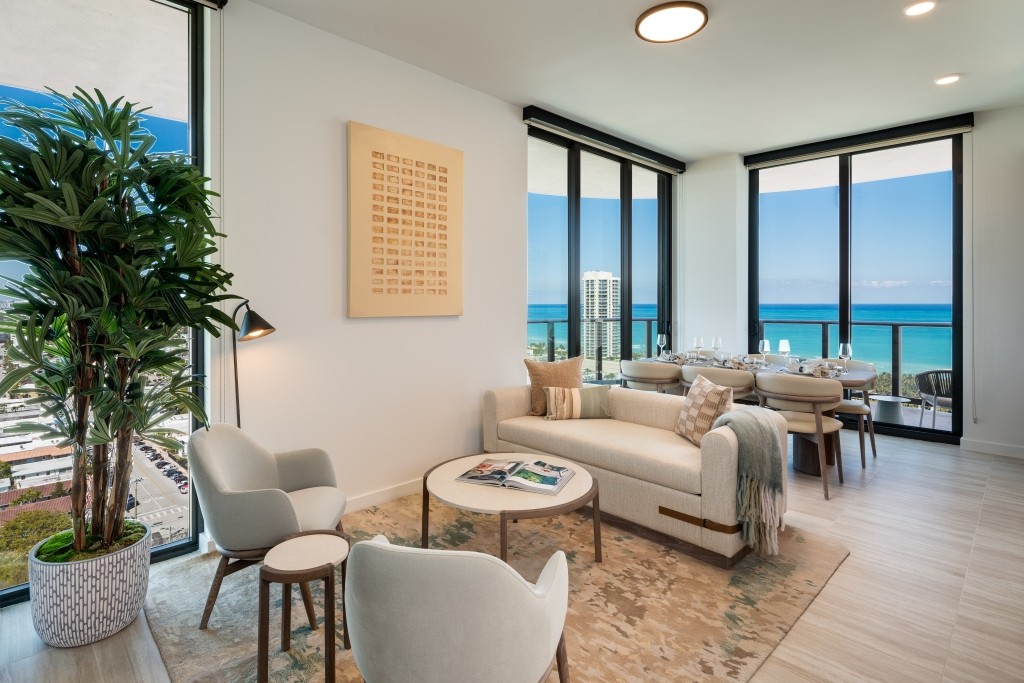
Living room in 72 Park (image: Lefferts)
So you have these developments. We’ve just delivered the first one, 72 Park, and we’re in the process of selling the second, PALMA — both just two blocks from the beach, on Miami Beach proper, that allow you to rent the residences short term. You can use it when you want and rent it when you want, and essentially cover your expenses in large part, if not generate an income, depending on how much you use it. This is something that doesn’t really exist on Miami Beach.
There’s been such a strong movement by the hotel lobby to block short-term rentals that there are no real short-term-rental properties. So when they created a legal framework for the building requirements, the developer was finally able to deliver such a building. Now there’s a great opportunity.
There may be a lot of short-term-rental buildings coming online in the city of Miami itself, but there is no area with more tourism than Miami Beach. Miami is a very global city — we talked about the economic trajectory, the bright future. But there’s just something about when the ocean meets the sand and you have this beautiful beach experience that’s unlike anything else. People love the beach. That gives you the chance to have something very unique in a little pocket of a city where everybody wants to be. And that’s the other thing —
Finance Colombia: I’m sorry to interrupt — I didn’t mean to step on you, but you made me think of something. One of the other advantages North Beach has is that you’re close to the party, but you’re not in the party.
I remember working right there in the heart of South Beach. I didn’t live on Miami Beach, but the office of the company I worked for was there, and at night it’s a nonstop party. It’s one thing if you visit — if you visit, you’re going to love that. But if you’re living there, you may want to get to the party sometimes, and the nice thing about North Beach is that you’re very close to it. You can take public transportation, the bus, a scooter — you’re right there. But you can also sleep at night; there’s some peace and quiet, a reasonable amount. You’re not out in the country, you’re still in the heart of it all, but you’re not in the nightclub district.
Alicia Lamadrid Paysse: Yeah. And as everything ages — those hotels are aging too — there’s nothing like something new and fresh and clean, not full of older hotels packed with tourists. The beach is a completely different scene. You go to the beach in North Beach and it’s wider, the sand is longer, and you’re not competing with thousands of people whose hotel is right there and who just walk to the beach, so you’re completely inundated with tourists.
In the North Beach area, there aren’t many hotels; it’s a more residential area. You go to the beach and there’s space — you can have a conversation without anyone overhearing, you can relax. It’s really nice. The area is changing very dramatically, but more for long-term users, more residential. There are two rental buildings going up for people to live in full time, so the community continues to grow and have that neighborhood vibe.
And here’s a detail I think is compelling. If you look at a map of Miami Beach, it’s pretty skinny. It gets wider south of about 23rd, and wider again north of 63rd. Between roughly 25th and 60th, it’s a very skinny strip — Collins and Indian Creek — with no space to develop a neighborhood. But the North Beach area, north of 63rd up to about 79th, is wider. So you have a Publix, space for stores, yoga studios, coffee shops — a lot of pedestrian benefits you don’t get farther south. It’s a really unique location, and it’s creating this wonderful little community. We’ve already seen new restaurants open. You can totally see how, over the next couple of years, it will keep evolving and probably become one of the most popular areas on the beach.
Finance Colombia: Now tell me more specifically about the development. I believe it’s called PALMA. Let’s talk about the nuts and bolts, not to mix metaphors — the starting price, the configurations, one-bedrooms, three-bedrooms, efficiencies. Tell me about the property itself. Is it already built? Is it under construction? What’s it going to have in terms of amenities, and which market segments do you think it would be most attractive to?
Alicia Lamadrid Paysse: PALMA is a boutique building of 121 units, which I think is really nice when you’re looking at a property of this type. It’s only one- and two-bedrooms — we’ve had the most demand for that type of residence. When you’re talking about something that isn’t really a hotel, but more of a short- or medium-term stay — people who may want to come for a week, three weeks, but not forever — the building starts from just $630,000 USD today.
So you have price points that let you own a fully finished and furnished one-bedroom on Miami Beach, just steps from the beach, for $630,000 USD — which, like you were saying, is extremely attractive, especially when you consider you can rent the property when you’re not using it. By the nature of it being a short-term-rental-permitted building, you’re not really going to see end users buying there; it’s more transient-oriented. So it’s been people looking at it as a second home or an income-producing rental property.
You have wonderful amenities — and especially in our neighborhood, a very wellness-focused building, from cold plunge to infrared sauna to a gym and an outdoor area where you can grill. Across the street you basically have a wonderful tennis facility, the Miami Beach Tennis Center. Right next to the beach you have beach tennis, volleyball, and an incredible boardwalk you can run on, if you like to run when you’re not being chased — which many people here seem to like.
You also have a growing restaurant scene in the area. You have Bal Harbour just a few minutes away, with incredible shopping. And then other malls — Aventura Mall isn’t far, because we’re in North Beach, and the Design District is basically just across the causeway. So it’s a really exciting location. Excluding our penthouse, our price ranges run from about $630,000 USD to just under $2 million USD.
Finance Colombia: Wow. Like I said, I was surprised when I saw that, because I know what Miami real estate prices are like. I almost thought it was a typo, so it’s really encouraging.
And also the legal structure you mentioned around short-term rentals — because a lot of people do that informally, but we’ve seen a backlash, with condo and homeowners associations, and cities that want tax revenue. To have the safety of doing it the right way is important, because you don’t want to mess around and do things under the table when you’re talking about a property that might be over $1 million USD within a few years of buying it. So that’s encouraging.
Now, the last thing I want to touch on is another thing that surprised me. As I was preparing for this, I saw in your statistics that something like 6% of the buyers you already have are from Colombia. Colombia already has a strong presence in South Florida, especially throughout the metro area — we always like to be out in Doral and Sweetwater, but really everywhere. Why do you think this property, or what is it, has caught the attention of buyers and investors with ties to Colombia?
Alicia Lamadrid Paysse: I think the ability to rent it out short term is a big part of it. The Colombian buyer has a lot of experience in Miami — for the most part, they’ve been buying here for decades, and have owned different types of properties, or have friends and family who have. So having the flexibility of not just a second home, but also something that can generate rental income, has been very popular with Colombian buyers who see it as a quasi-investment, and not something they’re going to move into directly.
I don’t know if it’s timing or the stars aligning, but there seems to be a lot of interest from Colombia recently. We’ve had some really successful trips over there in the past six months. So it’s an interesting time. And we’re expecting many, many Colombians to visit us soon with the World Cup — so hopefully that will be a new wave of Colombian buyers, on the days between games, coming to buy themselves a place here in South Florida.
Finance Colombia: Absolutely. Is there anything you wanted to touch on that I neglected to mention or ask about?
Alicia Lamadrid Paysse: When you mentioned the neighborhood evolution, and when we started talking about North Beach — Miami is really becoming a city of neighborhoods. I think there probably isn’t another neighborhood, and I know them pretty well, that has such a great combination of proximity. You’re really close to everything: not far from the airport, close to the city, extremely close to the beach and to amenities, because this neighborhood has really built-in amenities. I mentioned the tennis center, the beach volleyball, the beach tennis. That’s not something to be taken lightly.
It also has a community center on Normandy, about 15 minutes away walking, and a public golf course. So you have a lot of access to things — and access in Miami is, every day, more and more difficult. To give you that kind of resort lifestyle at PALMA without having to pay resort prices is something I think will give people a reason to come back, both guests and owners who want to use it as a second home. Having that access to all of those benefits, so close to their doorstep, really gives them the best of the Miami lifestyle, in a neighborhood with a great future for further valuation long term as well.
Finance Colombia: Now, you’re a full-service brokerage. So even aside from PALMA — people might want to see PALMA, or somebody might say, ‘That’s great, but if I came back to Miami, I like Weston,’ which is kind of way out there. That’s what some people like about it. I’m not trying to go party anymore; I did that back in the ’90s.
So people can contact you all, because you have competence throughout the entire South Florida area. Is that correct — not just on the beach, or a particular condo property?
Alicia Lamadrid Paysse: That’s right. We have just under 400 agents in our company, and over seven branch offices in different markets, so we have agents all around the city. We work with people with different goals all the time. Obviously, we have a huge focus on development sales.
When people are looking at condominiums, especially today, new is a huge advantage, because of some of the condo law that came in reforming things after the tragedy in Surfside. Buildings now have to fund reserves and have the financial wherewithal to make major renovations when necessary, as opposed to deferring improvements because of cost-cutting. Buying into a building that has all of that financial planning from day one is a huge advantage, and it’s why, when people are looking at condominiums, they’re mostly looking at new developments. So PALMA is really, I think, one of the best options out there.
But for people who have different needs — maybe they want a house, or a different area, like you mentioned — we absolutely are available and happy to help.
Finance Colombia: How can interested buyers or investors — potential residents or buyers — get in touch with you or with the organization if they want to gather more information?
Alicia Lamadrid Paysse: We have a very robust website with access to a list of all of our agents, and people can filter by language. So if you need someone who speaks a particular language, you can filter and see which agents can help. Our main office is in Brickell, with a robust group of agents. If you call our main office with a particular niche you’re looking for help with, they can point you in the right direction. And of course, I’m always happy to help with the matchmaking, if necessary, between a member of our company and a potential buyer. So there are multiple ways.
Finance Colombia: Absolutely. And of course, we’ll include your contact information. You’ve been very generous with your time — I really appreciate it. It’s an honor to speak with you. Like I said, I’ve known about the organization going back 20 years, from my time in Miami, and you have a sterling reputation. That’s important, because, sadly, there are so many flim-flam artists running around South Florida — any place with an attractive lifestyle tends to see that, whether it’s Las Vegas, Los Angeles, or Miami. So it’s important to work with reputable people, and an organization with a reputation. I haven’t had personal dealings with you, but your reputation speaks for itself. Thank you so much for your time. We’ll certainly stay in touch.
Alicia Lamadrid Paysse: Thank you so much for your time, and for inviting us to speak with you today. You take care.
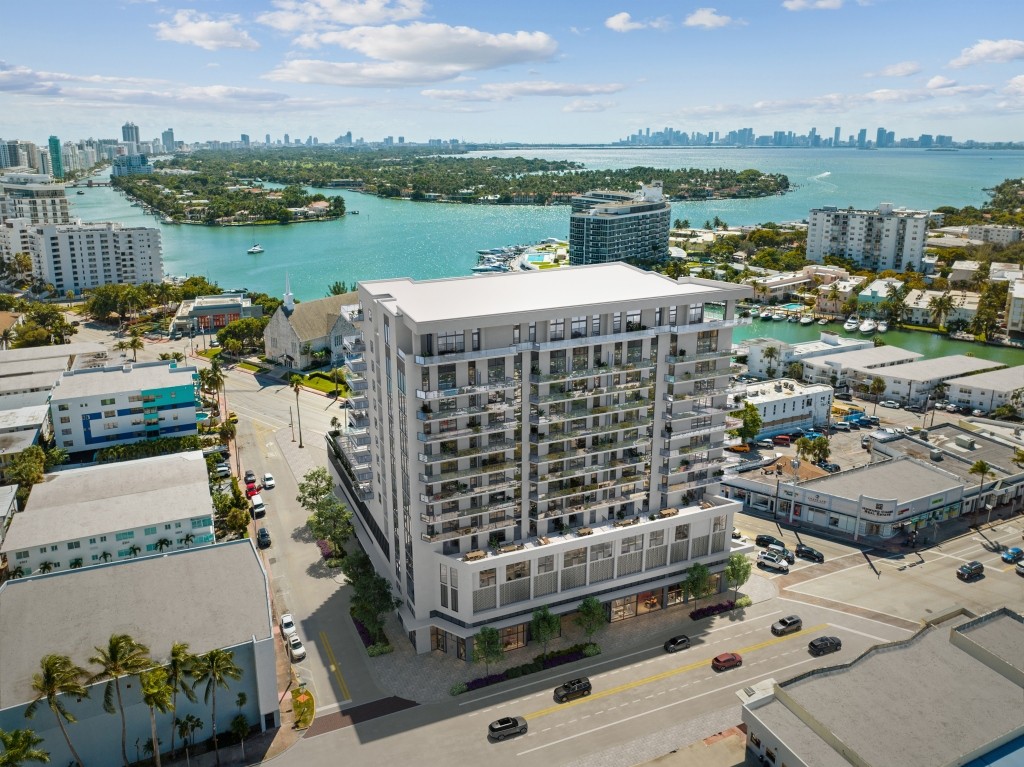
Palma Miami Beach Residences rendering (credit Lefferts)